Summary: The Smithsonian Blog has posted short biographies of five brilliant women mathematicians that everyone should know.
1. Hypatia (ca. 350 or 370 - 415 or 416)
One of the first female mathematicians. Last known member of the Library of Alexandria. Followed her father, Theon, to study math and astronomy.
2. Sophie Germain (1776 - 1831)
Taught herself Latin and Greek to learn math and Geometry. First woman to win a prize from the French Academy of Sciences for her work on a theory of elasticity.
3. Ada Lovelace (1815 - 1852)
Worked with Charles Babbage on his Analytical Engine which is considered one of the first computers. She wrote the world's first computer program.
4. Sofia Kovalevskaya (1850 - 1891)
Moved to Germany to be more involved in the sciences and was privately tutored. Received a doctorate for writing on partial differential equations, Abelian integrals, and Saturn's rings. First woman (in the region around Stockholm) to receive full professorship.
5. Emmy Noather (1882 - 1935)
Developed many mathematical foundations used in Einstein's general theory of relativity. Received a PhD for a dissertation on a branch of abstract algebra.
Additional video:
Ada Lovelace
Showing posts with label Smithsonian. Show all posts
Showing posts with label Smithsonian. Show all posts
Wednesday, October 16, 2013

Sunday, October 6, 2013
The Visual Art of Music
Summary: One of my favourite things to see around the internet, are visual representations of invisible things. They tend to be creative and make great desktop backgrounds and this new article is no exception.
German photographer Martin Klimas has decided to photograph the music he loves. To do this, he poured multicoloured paint over his speakers (protected of course) and cranked the volume up. The paint leaps into the air due to the sound vibrations and spectacular pictures are revealed.
Smithsonian Mag
Thursday, October 3, 2013
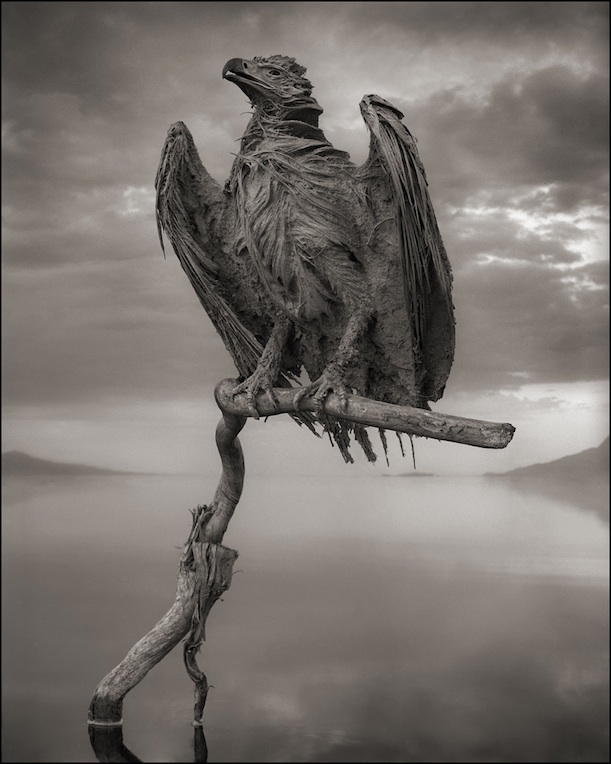
Petrified Animals
Summary: An Alkaline African Lake has been turning animals into stone. There's some very interesting science behind this, but I will just leave you with one of my favourite images. Click the picture to head to the article.
Sunday, September 22, 2013
The Women Who Mapped the Universe
Summary: Pickering's Harem is what they were know collectively as; only a few are remembered individually. These are the women that helped to catalog the universe and organized all the astrophotography done at the Harvard observatory in the early days. Pickering used his human computers for largely clerical duties: reducing the photographs, comparing the stars to other already classified stars, or cataloging the pictures themselves. Despite this they did perform the important work that helped the universe be classified.
One of the few individuals to be remembered is Annie Jump Cannon. She is responsible for the system of classifying stars that the International Astronomical Union still uses today. However, she did not actually get any recognition as the system was dubbed the Harvard system of spectral classification.
Smithsonian
Sunday, September 15, 2013
Cosmic Caterpillar
Summary: Hubble has yet another incredible space image for us. It is a cloud of gas that looks like a caterpillar. Unlike the small creatures we are used to on earth, this celestial caterpillar is 6 trillion miles long. It is actually a cloud of gas collapsing and may give birth to a star. But the important part is how beautiful it is.
Smithsonian Mag
Smithsonian Mag
Thursday, September 5, 2013
What haven't the Romans done for us?
Summary: Proving once again that the Romans were geniuses, scientists have deduced that they knew the secrets of nanotechnology. The Lycurgus Cup appears jade green when lit from in front but glows a red color when lit from behind and had been puzzling historians for years. It was recently discovered that this phenomenon is due to tiny flecks of metal, like the Romans were using nanotechnology to allow different colors shine at different times. It may have even changed color depending on what liquid was inside the cup. Pretty cool use for the technology.
Smithsonian
Smithsonian
Magnetic Flips
Summary: While interning at the Planetarium this summer, a lot of people had asked about what will will happen when the magnetic poles of the sun flip in a few months. The mainstream media, we found, had been once again stirring things up like it would be huge. This would be true if we were talking about Earth's magnetic field reversing, but not so much with the sun. As stated in the article, it is a very regular occurrence, about once every 11 years. It will be a gradual change with the magnetic field slowly fading to zero and then reversing directions. Any impact this has on Earth would be as a result of the shifting heliosphere. It may temporarily disrupt telecommunications while at the same time shielding the satellites from harmful cosmic rays. All in all, nothing to worry about.
Smithsonian Mag
Smithsonian Mag
Wednesday, September 4, 2013
New Lego scientist
Summary: I don't know if you are into Lego, but they have released a new figurine. It is a female scientist complete with flasks! This is not only breaking grounds for female scientists in the public eye, it also differs from the previous Lego scientists that were basically stereotypes.

Smithsonian Mag
-------
Also, you will be seeing more science news stories more frequently on the blog because I need to find at least 4 STEM related articles each week for my physics lab so they will be put on here. What does this mean for the blog? More content, wider range of article, and more diverse sources. If you know of any good sources, don't hesitate to let me know!
Wednesday, June 27, 2012
Water on Mars?
A new study of fragments from the planet Mars strongly suggest that the interior of the planet may contain an amount of water similar to that of Earth's mantle.
Does this remind anyone else of the Doctor Who episode "The Waters of Mars"? I'm not sure if I want them to colonize anymore.
Smithsonian: http://www.smithsonianmag.com/blogs/suprising-science/scientists-discover-that-mars-is-full-of-water.html?c=y&page=1&device=iphone
Does this remind anyone else of the Doctor Who episode "The Waters of Mars"? I'm not sure if I want them to colonize anymore.
Smithsonian: http://www.smithsonianmag.com/blogs/suprising-science/scientists-discover-that-mars-is-full-of-water.html?c=y&page=1&device=iphone
Subscribe to:
Posts (Atom)